
Weight-bearing exercises for osteoporosis
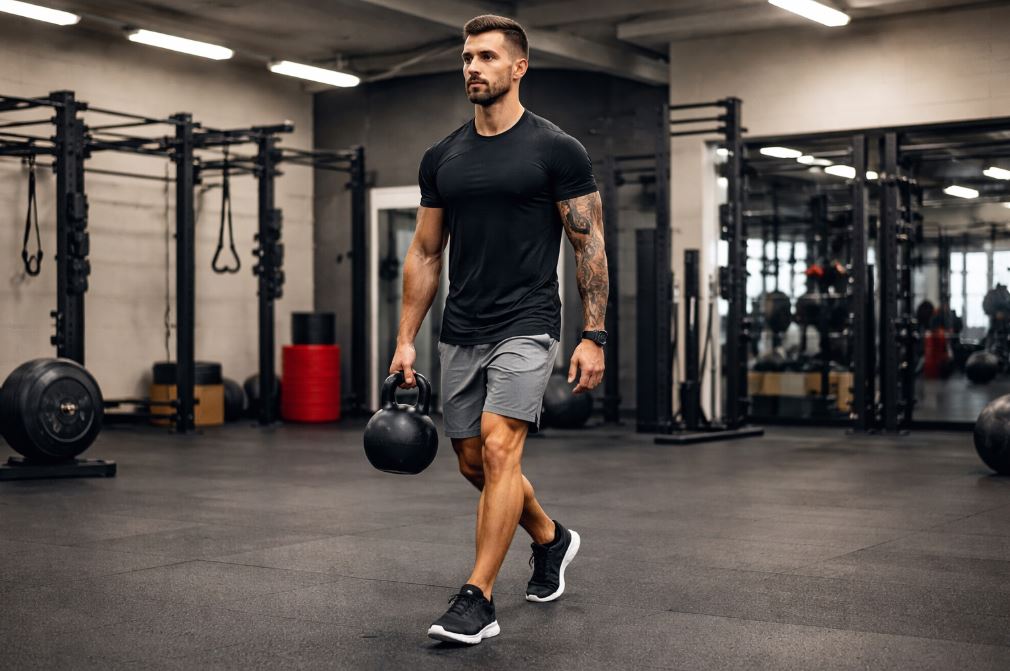
When people think of physiotherapy exercises, they often picture resistance bands, stretching routines or isolated strength exercises such as bicep curls. While these exercises certainly have their place, there is one simple movement that delivers exceptional benefits for strength, balance, posture and overall function: the loaded carry.
Whether it’s a farmer’s carry (holding weights in both hands), a suitcase carry (holding weight in one hand) or an overhead carry, loaded carries involve picking up a weight and walking with control. Simple in concept, they are one of the most effective functional strength exercises available.
Physiotherapists often use loaded carries in rehabilitation programs because they closely mimic the physical demands of everyday life while improving stability, coordination and resilience throughout the body.
What is a loaded carry?
A loaded carry is a functional exercise that involves carrying a weight while walking for a set distance or time. Unlike many traditional gym exercises that target a single muscle group, loaded carries require multiple muscles and systems to work together.
Common variations include:
- Farmer’s carry: Weight held in both hands
- Suitcase carry: Weight held in one hand
- Overhead carry: Weight held overhead
- Front rack carry: Weight held at shoulder height
These variations challenge balance, posture, grip strength and core stability in different ways, making them valuable tools in both rehabilitation and strength training programs
The benefits of loaded carries
1. Improve balance, stability and functional strength
One of the primary goals of physiotherapy is helping people move confidently and safely in everyday life. Carrying shopping bags, lifting luggage, moving furniture and carrying children all require the ability to manage load while maintaining balance and posture.
Loaded carries challenge the body’s stabilising muscles in a way that static exercises often cannot.
For example, during a suitcase carry, the weight is positioned on one side of the body. To remain upright, the core muscles, obliques and hip stabilisers must work continuously to prevent leaning or losing balance.
This translates directly to:
- Better balance and coordination
- Improved walking mechanics
- Enhanced postural control
- Reduced falls risk
- Greater confidence during everyday activities
2. A safe and self-limiting exercise
From a physiotherapy perspective, one of the greatest advantages of loaded carries is that they are naturally self-limiting. A self-limiting exercise is one where poor technique quickly becomes difficult to maintain. If the load is too heavy, your grip weakens, posture deteriorates or your body simply tells you it’s time to stop.
Unlike some exercises where compensations can continue unnoticed, loaded carries provide immediate feedback. When performed with proper lifting technique and an appropriate weight, loaded carries are a safe and effective way to build strength while minimising unnecessary stress on the joints.
3. Supporting bone density and skeletal health
As we age, maintaining bone density becomes increasingly important for reducing fracture risk and preserving independence. Loaded carries are an excellent form of weight-bearing exercise because they place controlled compressive forces through the spine, hips and lower limbs. This type of mechanical loading stimulates the body’s natural bone-building processes and supports long-term skeletal health. For this reason, loaded carries may be a valuable addition to exercise programs designed to improve bone health and reduce age-related bone loss.
4. Full-body strength and conditioning in one exercise
Few exercises deliver as much value as loaded carries.
While walking with a challenging load, your:
- Grip strength
- Forearms
- Shoulders
- Upper back
- Core muscles
- Hip stabilisers
- Legs
are all working simultaneously.
This full-body muscle engagement allows you to develop functional strength, muscular endurance and cardiovascular fitness at the same time. Rather than isolating individual muscles, loaded carries train the body to work as an integrated system, making them one of the most efficient exercises available.
Who can benefit from loaded carries?
Loaded carries can be beneficial for a wide range of people, including:
- Individuals recovering from injury
- Older adults looking to improve balance and reduce falls risk
- People wanting to improve posture and core stability
- Athletes returning to sport
- Individuals seeking to improve functional strength
- People looking to support bone health through weight-bearing exercise
As with any exercise program, an assessment by a physiotherapist can help determine the most appropriate variation and loading for your individual needs.
How to perform a loaded carry safely
If you are new to loaded carries, start with a manageable weight and focus on quality movement.
Set up correctly
Treat the initial lift like a deadlift. Maintain a neutral spine, brace your core and drive through your legs as you lift the weight.
Stand tall
Keep your chest lifted, shoulders relaxed and pulled slightly back, and avoid allowing the weight to pull you into a slouched posture.
Take controlled steps
Walk slowly and deliberately. Short, controlled steps help maximise stability and encourage greater activation of the core and hip muscles.
Main good posture
Focus on staying tall throughout the exercise and avoid leaning excessively to either side.
Loaded carries combine strength training, balance training, core stability and functional movement into one simple exercise.
Whether you’re recovering from injury, looking to improve balance, build strength, support bone density or enhance everyday function, loaded carries offer an efficient and highly effective solution. Sometimes, one of the best exercises is also one of the simplest: pick something up and take it for a walk.