
The science of recovery
At our clinic, one of the most common conversations we have with clients is about recovery. Whether it’s runners logging daily kilometres, or high-intensity training fans who want to smash every session, the idea of taking a rest day can feel counterproductive.
But here’s the truth: your body doesn’t get fitter DURING a workout. It gets fitter AFTER the workout. You need the rest to ‘lock in’ the benefits of your workout.
The supercompensation curve
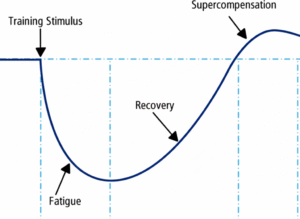
Sports science calls this process the supercompensation cycle. It looks like this:
- Workout (stress phase): During training, you actually become temporarily weaker. Muscles are fatigued, tissues are stressed, and energy stores are depleted.
- Recovery phase: Over the next 24 – 72 hours, your body repairs muscle fibres, replenishes energy, and adapts to the stress.
- Supercompensation phase: Once recovered, your performance doesn’t just return to baseline – it overshoots it. You’re stronger, faster, and better prepared for the next session.
- Detraining: If you leave it too long without training, those gains gradually fade back to baseline.
This cycle explains why timing matters. Train too soon, and you catch your body while it’s still repairing. Train at the right time, and you hit that performance peak, stacking gains over time.
Why training every day backfires
Many people think “more is better.” But pushing through with back-to-back high-intensity sessions can actually undo your progress:
- You interrupt recovery and adaptation.
- Fatigue accumulates, leading to declining performance.
- Injury risk climbs. Overuse injuries like shin splints, tendinopathies, and stress reactions are classic signs of too much, too soon.
Research and physiotherapy practice suggest that for most people:
- High-intensity sessions (like HIIT, heavy lifting, or long runs) need 48 – 72 hours before repeating the same muscles or energy systems.
- Low-intensity activity (walking, mobility, easy cycling) can be done daily and even speeds recovery.
How to use rest days the right way
Rest doesn’t mean lying on the couch all day. In fact, active recovery often works best:
- Gentle walking, swimming, or cycling
- Stretching and mobility work
- Yoga or Pilates
- Adequate sleep and good nutrition to fuel tissue repair
Takeaway
Training breaks you down. Recovery builds you up. Without rest, you’re just breaking down.
So if you want to run faster, lift heavier, or perform better – embrace your rest days. They’re not holding you back. They’re your secret weapon.